Photographing and Touring Point Reyes
Where the land ends and the wild begins
An hour north of San Francisco, Point Reyes National Seashore is one of the most remarkable places to photograph wildlife on the West Coast. The peninsula sits on the far side of the San Andreas Fault, riding a different tectonic plate from the rest of the continent, and it feels like its own world: more than 71,000 acres of protected land and 80 miles of undeveloped coastline, where fog, light and wildlife change by the hour.
I live and work in Marin County, and Point Reyes is my home ground. This page is an introduction to what makes it so special for photographers, and what you can expect to see.
Why Point Reyes?
Extraordinary bird life. Nearly 490 bird species, roughly half of all those recorded in North America, have been seen here. That is the greatest bird diversity of any U.S. national park.
Big, visible mammals. Around 80 mammal species, from tule elk and bobcats to elephant seals and harbor seals, many of them easy to find and photograph in open country.
Rare and protected species. Dozens of species here are listed as threatened, rare or endangered.
Many habitats close together. Grassland, forest, wetland and rocky shore sit within a short drive of each other, so one outing can move from elk on the headlands to shorebirds on the mudflats.
Light. Coastal fog, soft overcast and dramatic clearing light make for images you won't get anywhere else.
The habitats
Coastal grasslands and prairie
The rolling open headlands are the heart of Point Reyes wildlife photography. With little cover, animals are visible at a distance, and the backdrop of ocean and sky is hard to beat. This is where you find tule elk, bobcats hunting gophers in broad daylight, coyotes, and raptors such as northern harriers and white-tailed kites working the fields.
Forests of Inverness Ridge
Inverness Ridge divides the peninsula's forests into two distinct worlds: bishop pine to the north and Douglas fir to the south. These shaded woods hold black-tailed deer, acorn woodpeckers, western gray squirrels, songbirds, and the elusive northern spotted owl. Light is softer and more intimate here, ideal for mood and detail.
Estuaries, wetlands and mudflats
Tomales Bay, Drakes Estero, Limantour and the restored Giacomini Wetlands draw huge numbers of shorebirds, waterfowl, herons and egrets, especially in fall and winter. Since the Giacomini levees were breached in 2008, many birds have returned to this former pasture at the head of Tomales Bay.
Rocky headlands and beaches
The exposed outer coast is home to marine mammals and seabirds. Harbor seals, California sea lions and northern elephant seals haul out and breed along the shore, brown pelicans pass in fall, and from the headlands you can watch for gray whales on migration.
Resident wildlife highlights
Tule elk. A subspecies found only in California, and Point Reyes is the only national park where they live. Hunted nearly to extinction by the late 1800s, they were brought back to Tomales Point in 1978 and now roam the seashore freely. Bulls with full antlers, sparring during the late-summer and fall rut, against a backdrop of fog and ocean, are a signature Point Reyes image.
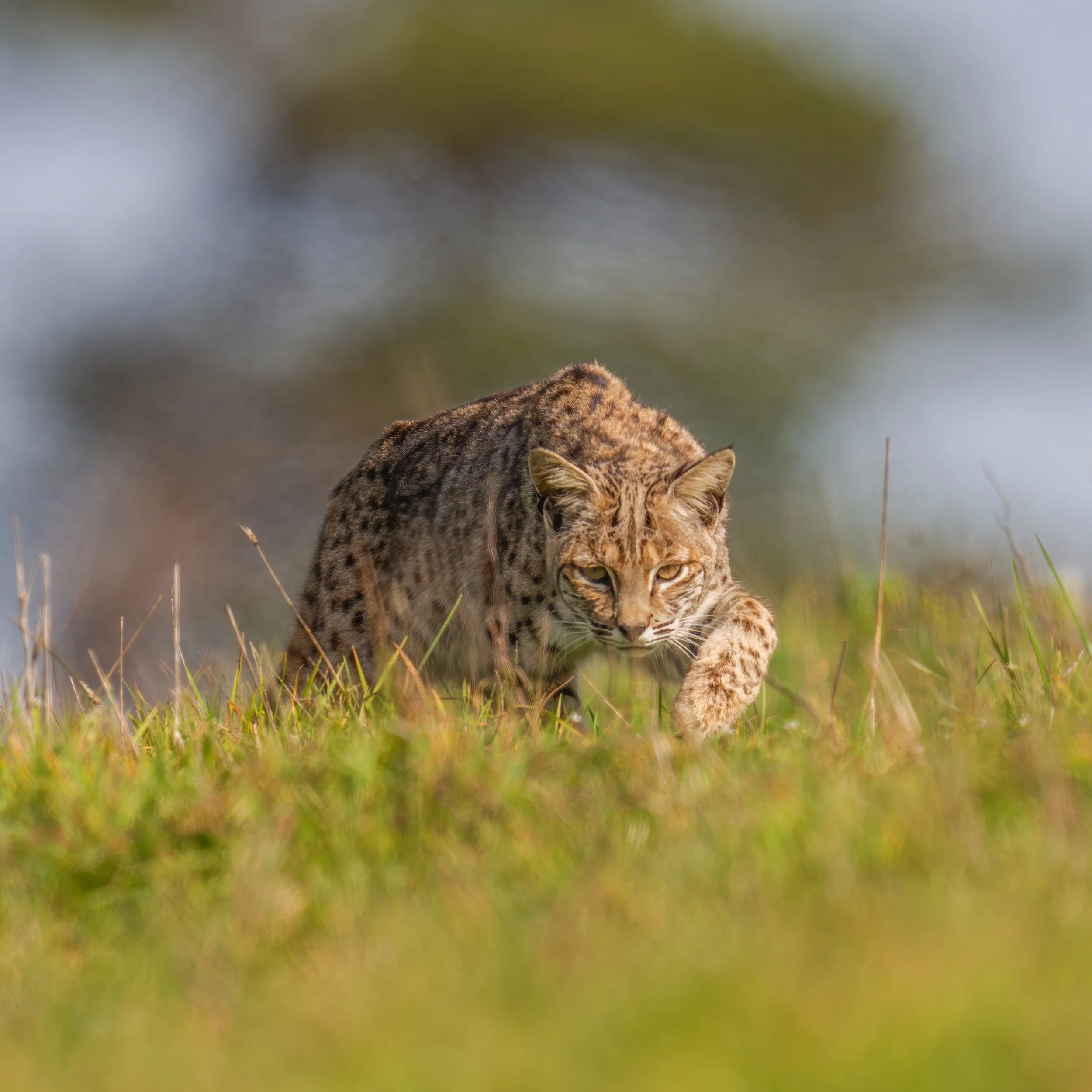
Bobcats. Point Reyes is one of the best places in the country to photograph wild bobcats. They often hunt in open grassland during the day, giving rare chances for clean, natural portraits and hunting behavior.
Northern elephant seals. Winter brings the dramatic breeding season: massive bulls competing on the beach, and pups born in midwinter. Viewing is from overlooks, never on the beach.
Coyotes, deer and smaller mammals. Coyotes are frequently seen crossing the headlands, and black-tailed deer are common along forest edges.
Birds. Owls, hawks, falcons, kites and harriers; shorebirds by the thousands in winter; pelicans, cormorants and seabirds along the cliffs. The Point Reyes area regularly reports one of the highest totals in the nation in the annual Christmas Bird Count.
Seasons at a glance
Winter (Dec–Mar): Elephant seal breeding season, gray whale migration, peak numbers of wintering waterbirds and shorebirds. Often the most dramatic light.
Spring (Apr–Jun): Wildflowers on the headlands, migrating songbirds, and new young across the peninsula.
Summer (Jul–Aug): Fog-wrapped mornings and moody coastal images; tule elk bulls in velvet heading into the rut.
Fall (Sep–Nov): Tule elk rut with bugling and sparring bulls, migrating raptors and shorebirds, and often the clearest, warmest days of the year.
Photographing responsibly
The wildlife here is wild, and keeping it that way is part of the craft. Good practice at Point Reyes means:
Keeping a respectful distance and letting the animal's behavior tell you when you're too close. Long lenses do the work.
Staying on trails and out of closed areas, especially around seal haul-outs and nesting sites.
No artificial lights for photographing or viewing wildlife at night, which the park prohibits.
Leaving pets at home: they're not allowed at most of the best wildlife areas.
Photograph Point Reyes with me
Guided Point Reyes photography experiences are coming soon. If you'd like to be among the first to hear about dates, or you're interested in a print or image license from my Point Reyes work, get in touch.
Photographing Point Reyes
Where the land ends and the wild begins
An hour north of San Francisco, Point Reyes National Seashore is one of the most remarkable places to photograph wildlife on the West Coast. The peninsula sits on the far side of the San Andreas Fault, riding a different tectonic plate from the rest of the continent, and it feels like its own world: more than 71,000 acres of protected land and 80 miles of undeveloped coastline, where fog, light and wildlife change by the hour.
I live and work in Marin County, and Point Reyes is my home ground. This page is an introduction to what makes it so special for photographers, and what you can expect to see.
Why Point Reyes?
Extraordinary bird life. Nearly 490 bird species, roughly half of all those recorded in North America, have been seen here. That is the greatest bird diversity of any U.S. national park.
Big, visible mammals. Around 80 mammal species, from tule elk and bobcats to elephant seals and harbor seals, many of them easy to find and photograph in open country.
Rare and protected species. Dozens of species here are listed as threatened, rare or endangered.
Many habitats close together. Grassland, forest, wetland and rocky shore sit within a short drive of each other, so one outing can move from elk on the headlands to shorebirds on the mudflats.
Light. Coastal fog, soft overcast and dramatic clearing light make for images you won't get anywhere else.
The habitats
Coastal grasslands and prairie
The rolling open headlands are the heart of Point Reyes wildlife photography. With little cover, animals are visible at a distance, and the backdrop of ocean and sky is hard to beat. This is where you find tule elk, bobcats hunting gophers in broad daylight, coyotes, and raptors such as northern harriers and white-tailed kites working the fields.
Forests of Inverness Ridge
Inverness Ridge divides the peninsula's forests into two distinct worlds: bishop pine to the north and Douglas fir to the south. These shaded woods hold black-tailed deer, acorn woodpeckers, western gray squirrels, songbirds, and the elusive northern spotted owl. Light is softer and more intimate here, ideal for mood and detail.
Estuaries, wetlands and mudflats
Tomales Bay, Drakes Estero, Limantour and the restored Giacomini Wetlands draw huge numbers of shorebirds, waterfowl, herons and egrets, especially in fall and winter. Since the Giacomini levees were breached in 2008, many birds have returned to this former pasture at the head of Tomales Bay.
Rocky headlands and beaches
The exposed outer coast is home to marine mammals and seabirds. Harbor seals, California sea lions and northern elephant seals haul out and breed along the shore, brown pelicans pass in fall, and from the headlands you can watch for gray whales on migration.
Resident wildlife highlights
Tule elk. A subspecies found only in California, and Point Reyes is the only national park where they live. Hunted nearly to extinction by the late 1800s, they were brought back to Tomales Point in 1978 and now roam the seashore freely. Bulls with full antlers, sparring during the late-summer and fall rut, against a backdrop of fog and ocean, are a signature Point Reyes image.
Bobcats. Point Reyes is one of the best places in the country to photograph wild bobcats. They often hunt in open grassland during the day, giving rare chances for clean, natural portraits and hunting behavior.
Northern elephant seals. Winter brings the dramatic breeding season: massive bulls competing on the beach, and pups born in midwinter. Viewing is from overlooks, never on the beach.
Coyotes, deer and smaller mammals. Coyotes are frequently seen crossing the headlands, and black-tailed deer are common along forest edges.
Birds. Owls, hawks, falcons, kites and harriers; shorebirds by the thousands in winter; pelicans, cormorants and seabirds along the cliffs. The Point Reyes area regularly reports one of the highest totals in the nation in the annual Christmas Bird Count.
Seasons at a glance
Winter (Dec–Mar): Elephant seal breeding season, gray whale migration, peak numbers of wintering waterbirds and shorebirds. Often the most dramatic light.
Spring (Apr–Jun): Wildflowers on the headlands, migrating songbirds, and new young across the peninsula.
Summer (Jul–Aug): Fog-wrapped mornings and moody coastal images; tule elk bulls in velvet heading into the rut.
Fall (Sep–Nov): Tule elk rut with bugling and sparring bulls, migrating raptors and shorebirds, and often the clearest, warmest days of the year.
Photographing responsibly
The wildlife here is wild, and keeping it that way is part of the craft. Good practice at Point Reyes means:
Keeping a respectful distance and letting the animal's behavior tell you when you're too close. Long lenses do the work.
Staying on trails and out of closed areas, especially around seal haul-outs and nesting sites.
No artificial lights for photographing or viewing wildlife at night, which the park prohibits.
Leaving pets at home: they're not allowed at most of the best wildlife areas.
Photograph Point Reyes with me
Guided Point Reyes photography experiences are coming soon. If you'd like to be among the first to hear about dates, or you're interested in a print or image license from my Point Reyes work, get in touch.